reading-notes
Class 20 - Project Kickoffs
Written Class Notes
Read 20 - None
Resources Link/Pages
Things I want to know more about
Learning Journal
Reflection
Take 10-15 minutes at the end of lab to respond to the following questions, adapted from the article:
- What went well, that I might forget if I don’t write down?
- I am good at project management things. Tammy gave me a list of job position titles to look up so I will be doing that this weekend.
- What did I learn today?
- Our set up was pretty fast and I will learn more about playwright tonight.
- What should I do differently next time?
- Nothing today. It was pretty smooth, we got all of our prep work done pretty quick and decided on task assignments already.
- What still puzzles me, or what do I need to learn more about?
- Playwright because it’s definitely a new thing we need to learn for this project
- Thinking about each of your assignments for the day, reflect on:
- Is the assignment complete? If not, where exactly did you leave off, and what work remains?
- Assignments are complete. Will work on readings for next next week and playwright research.
- Is the assignment complete? If not, where exactly did you leave off, and what work remains?
Career 20 - Partner Power Hour - Report #4
If there is no live presentation on campus in this module, select the appropriate presentation from the list below. All presenters are open to connections and invite you to reach out to them, so that you can to learn more about them, their company, and the industry. You may find it difficult or challenging to connect with industry professionals and gain an inside look at how the tech world operates. We’ve drawn on our network to bring you speakers and topics relevant to this stage of your career transition. These presentations may serve to educate, enlighten, and motivate you along your journey. Take advantage of this opportunity, and make the most of the insights these presentations provide… you never know where a connection will lead.
- Breaking Down the Tech Interview w/Rover - Rover Engineering Team
- Whiteboarding Tips & Strategies - Roger Huba
- Automate Yourself Out of a Job - Adam Eivy
- Communication Under Stress - Eve Denison
- Deep dive - Dev Tools - David Souther
- CI/CD History Lesson - Kat Cosgrove
- The 7 C’s of Cybersecurity & Coding - Courtney Hans
- Your Net Worth - John Cokos
Communication Under Stress - Eve Denison
-
Share one or two ways the speaker’s information will change your approach to your career transition.
- If you’re already bracing yourself for things to go badly, you project an energy that’s not going to be effective in conversation. I do this a lot because I tend to see things realistically and I guess there’s a fine line between realistic and pessimistic.
- It’s acceptable to teach others how to communicate with you effectively, for example “If you need feedback, I respond well like this…” Really good advice, but remember to teach in an effective way too.
-
List a few key take-aways from this presentation.
- Strong emotions put different parts of your brain in the driver seat trying to get different things you want.
- Assumptions pose a significant obstacle to effective communication.
- In writing, there’s a risk of losing much in translation, leading to ineffective communication.
- Acknowledge personal triggers from life, as they accompany us to work and school, impacting interactions.
- Regularly check your general well-being; it’s acceptable to have a bad day, but it’s often neglected due to busyness.
- If you’re already bracing yourself for things to go badly, you project an energy that’s not going to be effective in conversation
- Differentiate between not getting what you want and not being heard to avoid confusion.
- When stressed in communication, take a pause to ensure you respond from a non-reactive part of the brain.
- Assess the urgency before responding immediately; not every situation requires an immediate reply.
- Utilize the “and over but” technique to acknowledge achievements and consider additional steps.
- It’s acceptable to teach others how to communicate with you effectively, for example “If you need feedback, I respond well like this…”
-
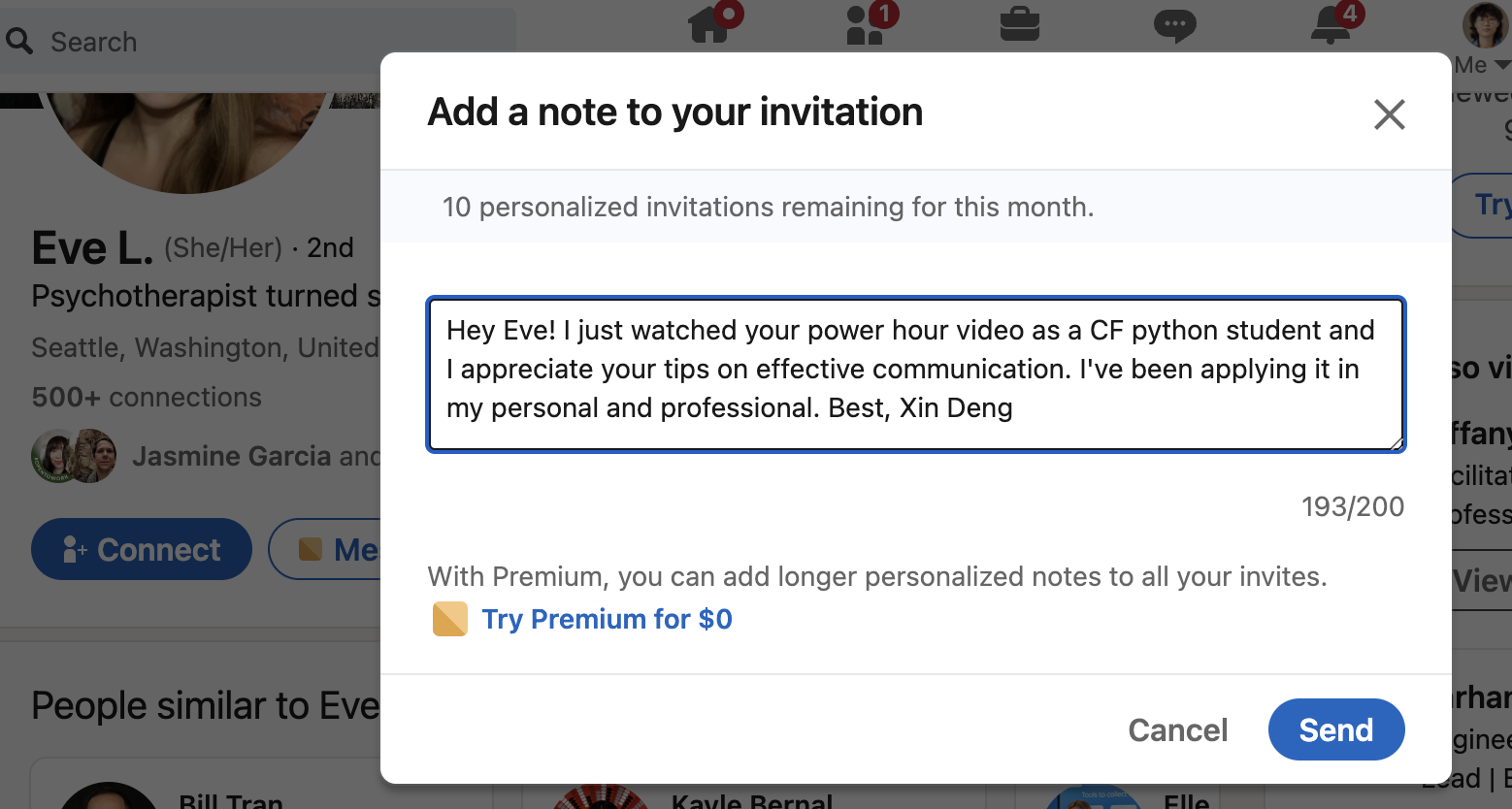
Share a screenshot of your LinkedIn connection request, including a nicely worded note, sent to the speaker or someone else at their company.